Genaro Network – The Future of Cryptocurrency Exchanges

0 Comments

Genaro Network – The Future of
Cryptocurrency Exchanges
There are a lot of different cryptocurrency exchanges out there, but the Genaro Network has just
recently emerged as one of them genaro network. As the name suggests, this is a crypto exchange for ERC-20
tokens, and it is possible to buy GNX with ETH. To buy this currency, you will first need to open
an account on Coinbase Wallet and then swap ETH for GNX. Once you have enough ETH, you
can then use this to purchase Genaro Network.

Ex-Bitmain CEO says crypto can grow to tens of trillions of dollars
The price of Genaro Network cryptocurrency has recently increased by 2% over the past 24
hours, reaching $0.003465. Its market cap is $1.05 million and its volume is $248,810. This
cryptocurrency is traded on 9 exchanges hyperverse net, with a total volume of $248,810. It has a maximum
supply of 675,000,000 and a circulating supply of 304,181,981. It is currently trading on nine
exchanges, with the most active markets being AEX, MEXC, and Bibox.
The Genaro Network has all the hallmarks of a future decentralized storage and app
development platform. Its reliability is outstanding, and its community of developers is growing.
In addition to offering free GNX tokens to their members, this network also provides real-world
services that can be used with GNX. While the network has a few unique features, it’s best to
know about the platform’s future potential before committing too much time to it.

📈 Genaro Network Price Prediction
The Genaro Network is an essential part of data security in the Web 3.0 era. As the world
moves towards a distributed, cloud-based computing environment, it will become more essential
as the Web 3.0 standard becomes more widely used. The Genaro network has high
performance, scalability, and customizability and is a great way to secure the data on the
internet. It’s time the Genaro Network takes center stage.
Powered by a decentralized storage network and public blockchain, the Genaro Network is a
one-stop solution for developers and users. The Genaro Network’s SPoR with PoS mixed
consensus mechanism aims to provide a high performance and security blockchain, paving the
way for data migration from centralized clouds. Besides providing a decentralized storage
network and DAPPs, the Genaro Network’s infrastructure is also designed to provide a more
secure and reliable internet.


The Innovative Side Of The Smart Film Application In Corporate Places

0 Comments

The Innovative Side Of The Smart Film Application In Corporate Places

Technology and innovation have become a part of our lifestyle. Modernized technology and artificial intelligence have made huge scope in the residential, official, and healthcare sectors digital signage Malaysia. There has been a huge advancement in the field of modern design and lifestyle.  We can see smart connectivity set-up, payment options, and smart entertainment as well.

The demand for technology in the residential and official spaces has tremendously risen. The scope of tech in daily life has gained great success. One such technological advancement in the field of the home interior has been introduced in the market. The smart film or the switchable glasses are the favorites of many officials, residential, and private operating spaces. This technology is a new step towards modern architecture and design.

The world leader in smart glass technologies | Gauzy

Overview of Smart Interior Films

The technology of smart film has its specialization. Many people take the use of this technology for construction and interior customization projects. The smart film application in corporate and residential places has benefited many persons. 

This type of film glass provides the ultimate privacy and architectural design digital information kiosk. A person can limit the light entrance based on his transparency choice. This glass technology gets widely used in windows, doors, roof shafts, tables, and other places.

Working of the smart film glass

The smart or switchable glass is dynamic and multifunctional. These Smart glasses are made with a combination of lime, potash, and silica. The value of these Smart film glasses and windows has comparatively risen over time. These glasses are equipped with self-adhesive technology that makes them cost-effective. 

These glasses are operated with an electrical switch and facilitate luxurious quality projection. The glass becomes transparent when the electric switch is turned on. One can also make the smart glass opaque by switching off the molecules of the Smart film.

Applications of the Smart Film Technology

The application of the smart glass holds a dominant share in the market. The Smart films are used in buildings, health sectors, corporate areas, private residences, and home. Many top organizations use smart film application in building and residential areas to save a large number of energy resources and sustenance.

Smart Glass - Best Efficient Smart Glass, Glass | Smartfilmglass.com

Offices

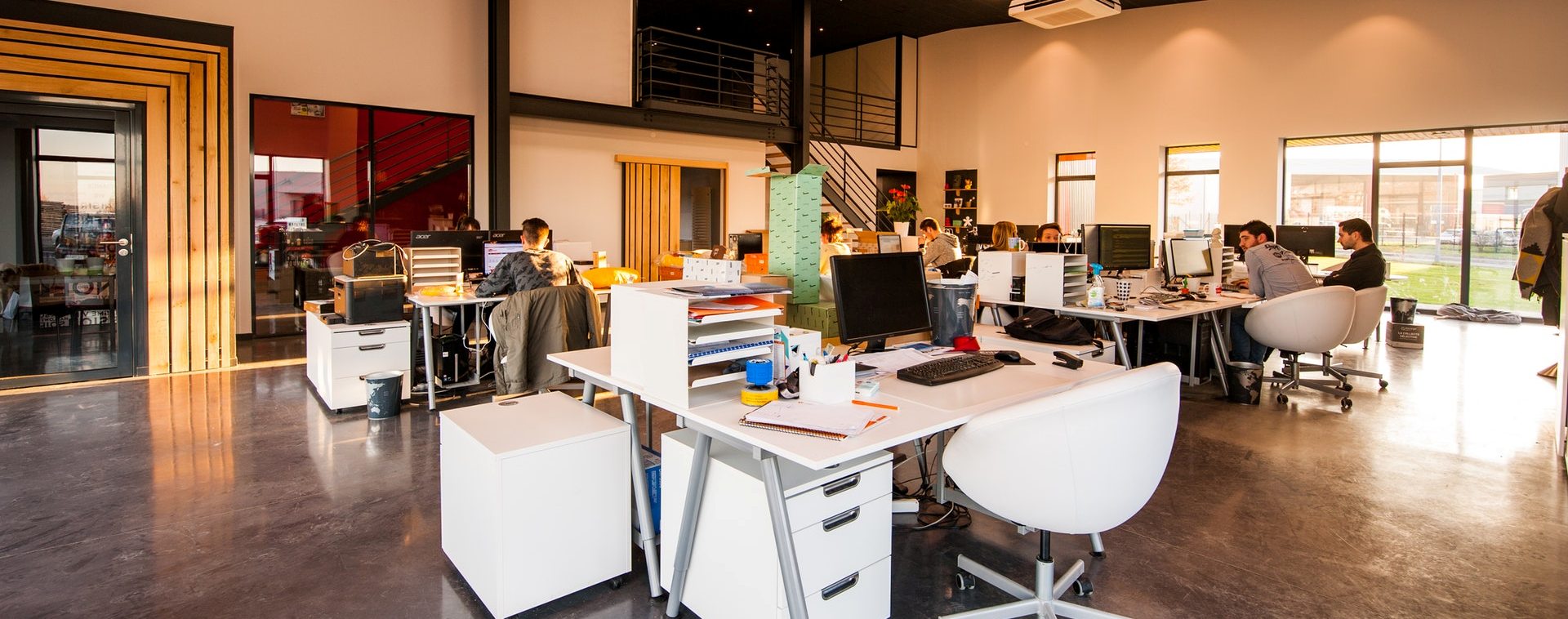
This advanced technology gets used in many corporate areas and offices Rev Interactive. The smart film glass acts as a partition between work areas and leisure space. It offers great light dimming modes as well.

Health areas

The smart film has limited the use of curtains and drapes in hospitals. They are energy efficient and offer hygienic services as well.

Hotels

Smart film innovation is used in hotel rooms and guest rooms. These films are often used in the bathroom glasses and lounge area. The opacity of the Smart film ensures the ultimate privacy of the people.

Residential area

The residential places have seen a rise in the demand for switchable glass doors, partitions, and windows. Many e and c G smart films are best suitable for exterior windows and privacy from the neighbors.

The rise of smart film application in corporate area, automotive area, and retail areas has reached new heights. A person needs to choose the best switchable film depending on their environment. One can take various online agencies and sites for the best services and information about this technology.


The Rise Of Flexible Suburban Offices In A Post-Covid-19 World

0 Comments

The impact of the coronavirus pandemic will undoubtedly continue to be felt for several months to come, as we all get used to new measures such as social distancing, only going out when essential and not not being able to see friends and family.

Nevertheless, one of the most global changes in the situation has arguably been the way we work and the places where we work. For the majority of us who do not fall into the category of worker occupying key positions, working from home took some time to adapt, with many kitchen tables, sofas and even garden sheds being used for replace the good old office.

With many companies now looking to assess what our return to the office might look like once normal life begins to pick up, integrating working from home into the work week will become a longer-term topic of discussion. As a result, an immediate consideration is the type of space businesses will need.

The hub and spoke approach to offices is one model that could become more popular. This involves having a main office (the “hub”) and many small subsidiaries (the “spokes”), which are often closer to the employees’ homes. In the post COVID-19 transition period, this model would make a lot of sense: it would reduce the need for workers to use public transport and it would also provide an efficient working environment. We expect that the increased adoption of this model will increase the demand for flexible suburban offices in the short term, and in the long term as well, as part of the workers will likely have the ability and desire to make these working arrangements permanent. .

One question that comes to mind is where exactly these new flexible suburban offices will be located. One of the possibilities could be to create flexible offices and work collaboratively to revitalize the main street, occupying vacant business units. Creating a space where local people can come to work, as well as access to shops or other amenities could be very attractive both in the short term, as people avoid public transport and commuting. towards city centers, but also in the longer term, since we are moving to a more flexible and local work culture.

Benefits for employees

Flexible desks provide a pleasant and seamless office experience, with an IT infrastructure and internet connection already in place, good ergonomic chairs and desks, and of course coffee to replace what’s available at home. .. In addition, they provide a level of social interaction that many people lack when working from home; even if you can’t see all of your coworkers, the socializing element is still important.

For those who live miles from the city center and commute to corporate headquarters every day, this could be a solution that would reduce the hours spent on a train or car. Even before the pandemic, the demand for flexible offices in rural areas exceeded supply, our “What Coworkers Want” report shows that only 8% of respondents work in flexible offices in rural areas, but 17% of them indicated that it was their preferred place of work. In addition, having more people working locally would also have environmental benefits.

Benefits for employers

While this idea can not only fit into a company’s ESG strategy, it can also help reduce a company’s cost base. The use of flexible desks could enable more efficient use of workspace by allowing workers to use it as and when they need it, which would help reduce overhead costs while also acting as a means of stimulating local economies and local job creation. Additionally, by giving employees control over their place and working environment, it is likely to result in a happier and more loyal workforce.

The current pandemic will be a catalyst for people and businesses to reassess current practices in every way, and the way we work will be a big factor. Flexible office space is an option for businesses that are reluctant to commit to a long-term lease. The sector is also well positioned to play a pivotal role as office occupants look to the flexible office market to diversify and strengthen the resilience of their occupancy portfolio.


Is The Outcome Favorable For The Flexible Office Sector?

0 Comments

While it is clear that in the short term the coronavirus pandemic will have a profound effect on the entire real estate sector, the flexible office market has found itself at the top of the list of exposed sectors due to the nature of the contracts. , mostly in the short term, and teleworking which now affects the majority of companies in the affected areas. We were able to interact with various providers around the world over the past week to understand their position and their plan for the future, as well as their feelings on the short and long term situation of flexible offices.

What was the immediate reaction?

In Europe and the United States, over the past three weeks, all flexible office providers have quickly focused on their customer renewal and retention strategy, making sure to work with their existing customers to help them get through. this period of uncertainty and for them to maintain a level of contractual occupancy (if not the occupancy of the building). This is what we have seen since the start of the year in Asia

In our discussions to date, providers have found that between 10% and 50% of their clients in the same building request some form of rent reduction. What are they doing to help their customers? To a large extent, it depends on their own position. So far, those with a management contract, or those who own and operate their assets, have been in a better position to offer relief to their customers. While those who paid their rent this quarter, like many others, clearly find themselves with less wiggle room to help short-term clients. Nevertheless, almost all of them make a gesture and most manage the scale of the aid on a case-by-case basis, giving priority to the companies most affected, those which could request financial aid,

So far, the different aids have taken many forms and, as noted above, are highly dependent on the position of both parties. We have seen a whole series of measures ranging from 50% rent reduction for one month, to 50% for 3 months, all the way to a free rent deferral which is then added to the next quarter. Several providers even offer their customers the possibility of reducing their workforce and therefore their surface area during this period, a strategy that is proving popular with customers.

In this context, there is a clear need for landlords to work with their operators to best assist them with their cash flow during the period, especially those who have a lease. What remains essential here is that a portion of any rent that providers “save” be passed on to the customer where possible in order to maintain occupancy, as well as the likely long-term loyalty of those they do. they were able to help. We have seen this example in Asia, where The Executive Center (TEC) has succeeded in negotiating a rent reduction with the owners of a large part of its portfolio of 135 buildings. The savings were then passed on to their customers, and in March they saw a “wave” of renewals in their wallets, especially since many customers did not want to take the risk of moving and it was therefore preferable to renew. The average tenure for members remains 37 months.

What is the impact on the occupancy rate, and therefore on the survival of service providers?

Cash and liquidity are king. COVID-19 is likely to test every provider’s business model like no other crisis before, with the simple fact that for a large portion of businesses, office space simply cannot be used in the short term as we manage the crisis. It is therefore likely that their survival will depend on their economic model and how they were in place before the crisis.

It goes without saying that for providers it is vital that they conserve their cash flow by working with their owner and with their customers in order to retain as much income as possible. Early signs are that small businesses are the hardest hit and most likely not to renew contracts, and that may well be the case. However, in our discussions with providers around the world, all types of businesses have asked for a reduction in rent, and if there is a trend, it is those that offer a more transactional line of services, and of course that sectors most affected such as tourism or leisure.